
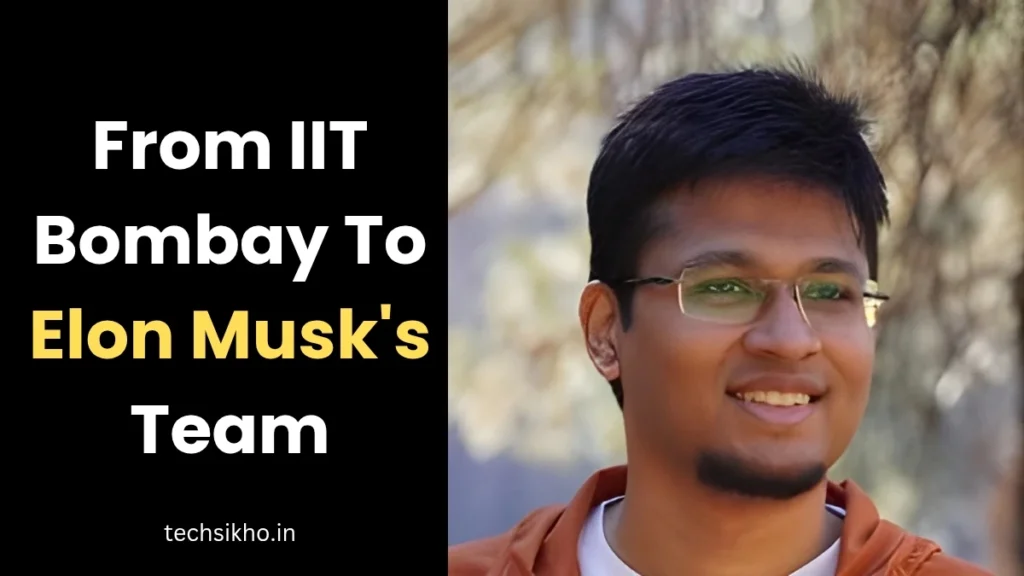
On March 14, 2026, a researcher named Devendra Singh Chaplot posted a quiet update on X.
“I am joining SpaceX and xAI, working closely with Elon and team to build superintelligence.”
Within minutes, Elon Musk reposted it with four words: “Welcome to @xAI!”
The internet did not stay quiet after that.
Tech communities across the world started asking the same question. Who is this person? Why did the most resource-backed tech billionaire on the planet personally welcome him in front of millions of followers?
The answer starts in India, in 2010, with a teenager who ranked 25th among 500,000 students in the most brutal entrance exam in the world.
Also Read: Your Instagram DMs Are No Longer Private After May 8. Here Is What You Need to Know.
Quick Facts
| Detail | Info |
|---|---|
| Full Name | Devendra Singh Chaplot |
| Education | IIT Bombay (B.Tech CSE, 2014) + Carnegie Mellon (PhD, ML) |
| IIT-JEE Rank | AIR 25 out of 500,000 candidates (2010) |
| IMO Rank | International Rank 5 (2010) |
| Previous Companies | Meta FAIR, Mistral AI (Co-Founder), Thinking Machines Lab |
| Key Models Built | Mistral 7B, Mixtral 8x7B, Mistral Large, Pixtral 12B |
| Joined | SpaceX + xAI (March 13, 2026) |
| Reports To | Elon Musk directly |
| Focus | Grok model training, superintelligence |
The Academic Record That Started Everything
In 2010, Chaplot secured All India Rank 25 in the IIT-JEE and achieved International Rank 5 in the International Mathematics Olympiad. Out of roughly half a million students sitting that exam, he finished in the top 25. Most people stop and celebrate at that point. Chaplot used it as a starting line.
He completed his B.Tech in Computer Science and Engineering at IIT Bombay in 2014, along with a minor in Applied Statistics. That statistics minor was not a random choice. It would become the foundation of everything he built in AI research over the next decade.
After IIT Bombay, he left India for one of the most competitive PhD programs on the planet.
Carnegie Mellon and the Question That Defined His Career
Chaplot earned his PhD from the Machine Learning Department at Carnegie Mellon University, one of the world’s leading AI research institutions, where he studied robotics, computer vision, and machine learning.
His doctoral research focused on a problem that sits at the heart of modern AI: how do you build a system that does not just process data on a screen but actually moves through, perceives, and interacts with the real physical world?
That question sounds simple. It is one of the hardest open problems in artificial intelligence.
His research won several major global AI competitions: the CVPR 2019 PointNav Challenge, the CVPR 2020 ObjectNav Challenge, and the NeurIPS 2022 Rearrangement Habitat Challenge. He also won the Visual Doom AI Competition in 2017, and received the Facebook Fellowship Award, one of the most selective programs for AI researchers working on high-risk problems. His work also received Best Paper and Best Demo awards at major AI conferences.
By the time he finished his PhD, he had a competition record that very few researchers in the world could match.
From Meta to Co-Founding a Billion-Dollar AI Company
After his PhD, Chaplot joined Facebook AI Research, known as FAIR, where he spent years designing machine learning systems at the intersection of vision, navigation, and robotics.
Then came the move that put him on the global map.
As a co-founder of Mistral AI, the French AI company, Chaplot played a key role in training Mistral 7B, Mixtral 8x7B, and Mistral Large. He also headed the multimodal group for the Pixtral 12B project.
Mistral became one of the most important AI companies in Europe. It grew into a multi-billion dollar company and positioned itself as a serious alternative to OpenAI. Chaplot did not just work there. He helped build it from the ground up.
After Mistral, he joined Thinking Machines Lab as a founding team member, the AI startup led by former OpenAI CTO Mira Murati. Two founding teams at two separate high-profile AI companies. Most researchers spend an entire career trying to reach one.
Why Elon Musk Wanted Him Specifically
Musk did not hire Chaplot because of his IIT rank or his PhD. He hired him because of a very specific combination of skills that almost nobody else has.
Chaplot’s background in embodied AI research, large language model training, and robotics maps directly onto what xAI and SpaceX are building together. His focus at xAI will be on Grok model training specifically.
The merger of SpaceX and xAI aims to overcome the terrestrial power wall by moving AI data centers to orbit and using SpaceX’s Starlink and Starship to power the next generation of superintelligence.
To build that, you need someone who understands large-scale AI model training and physical robotics systems simultaneously. That person is extraordinarily rare. Chaplot spent his entire career becoming exactly that person.
The three recent hires at xAI tell a coherent story. Andrew Milich and Jason Ginsberg, who scaled Cursor to a two billion dollar revenue run rate, joined to rebuild Grok’s coding product. Chaplot is working on the underlying model that product runs on. Together, the three hires describe a single strategy: rebuild Grok from the model layer up, then ship it through a product built by people who have done this before.
This is not a PR hire. This is Musk rebuilding xAI’s technical core with people who have actually done this at scale.
What Chaplot Himself Said
In his announcement post, Chaplot wrote: “I am excited to advance the fields I have obsessed over for years, from robotics research to building AI models on the founding teams of Mistral and TML. Both were extraordinary journeys with extraordinary people that shaped how I think about building intelligence from the ground up. Grateful for everything that brought me here and cannot wait to get started.”
That last line landed differently once Musk reposted it.
The Controversy That Followed
Not everyone celebrated.
Several users on X criticised the hiring, with some writing that Musk had hired an Indian researcher instead of native-born American talent. One user wrote: “Hey Elon, how about hiring some native-born Americans for once?” Another wrote: “Another F1 student visa to H1B then on to a green card.” The criticism arrived at the same time as Donald Trump announced changes to the H-1B visa program, replacing the random lottery system with a wage-and-skill-based selection process.
On the other side, many pointed out that Chaplot represents exactly the kind of global talent that has driven American technological leadership for decades.
The debate said more about the current political climate than it did about Chaplot’s qualifications. His record speaks for itself without any commentary attached.
The Bigger Picture
Devendra Singh Chaplot’s story is not just a career announcement. It is a signal.
The race to build superintelligence has moved past language models running on data centers. It now involves rockets, orbital infrastructure, physical robotics, and researchers who understand all of it at once.
As top institutions like IIT Bombay and Carnegie Mellon continue producing researchers of this caliber, the upcoming years will see an intensified race toward advanced machine intelligence, with Musk comparing xAI’s current development phase to the early iterations of Tesla, where repeated reinvention accelerated innovation.
Chaplot is one of the very few people on earth who sits at the exact intersection of every technology that race requires.
As of March 2026, he is building it directly under Elon Musk.
The next chapter of this story will be worth watching.
Also Read:
- Sam Altman Net Worth 2026: Age, Education & Best AI Coding Advice
- 8 Best AI Tools for Coding in 2026 | Beginner to Pro Guide
- I Tested Google Flow AI for 7 Days | Here’s My Honest Review 2026
- Aravind Srinivas Net Worth 2026: Success Story of India’s Youngest AI Billionaire
- The Complete ChatGPT Photo Editing Prompts That Will Instantly Upgrade Your Photos In 2026

It’s fascinating to see how Devendra’s academic background from IIT Bombay and his experience at Meta led to this next big step at SpaceX and xAI. The move underscores the growing convergence of digital and physical intelligence, especially under a leader like Elon Musk who truly understands both domains. It’ll be interesting to follow how this collaboration shapes the future of superintelligence.
[…] Also Read: Elon Musk Just Hired This IIT Bombay Grad to Build Superintelligence. Here Is Full Story […]